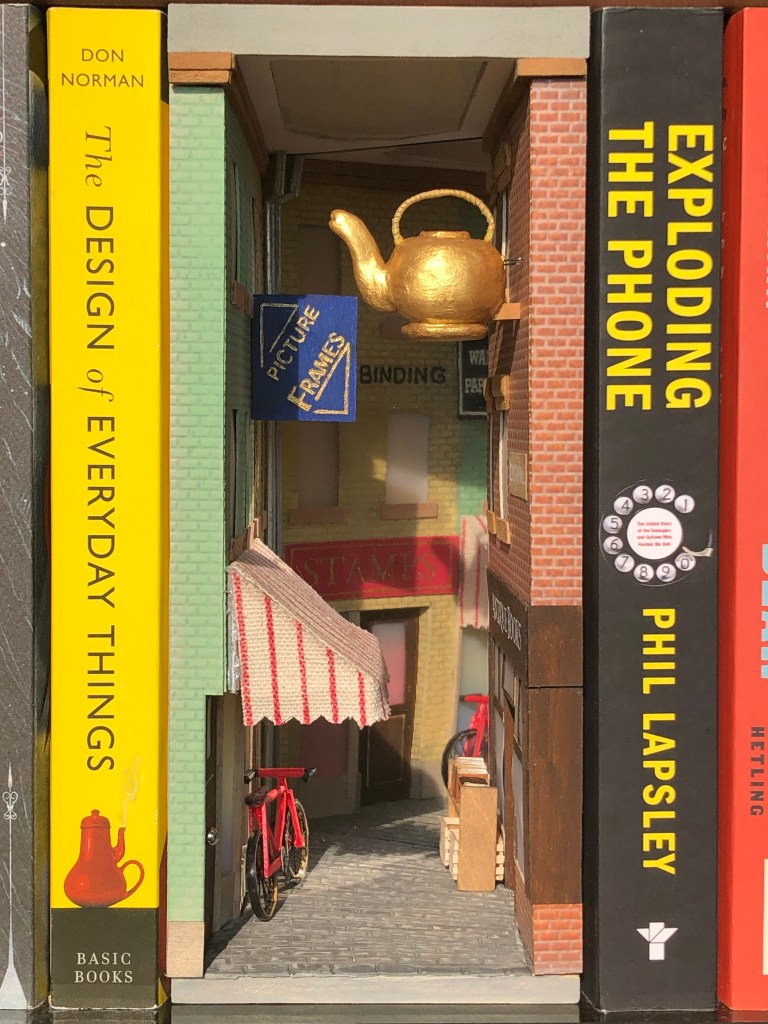


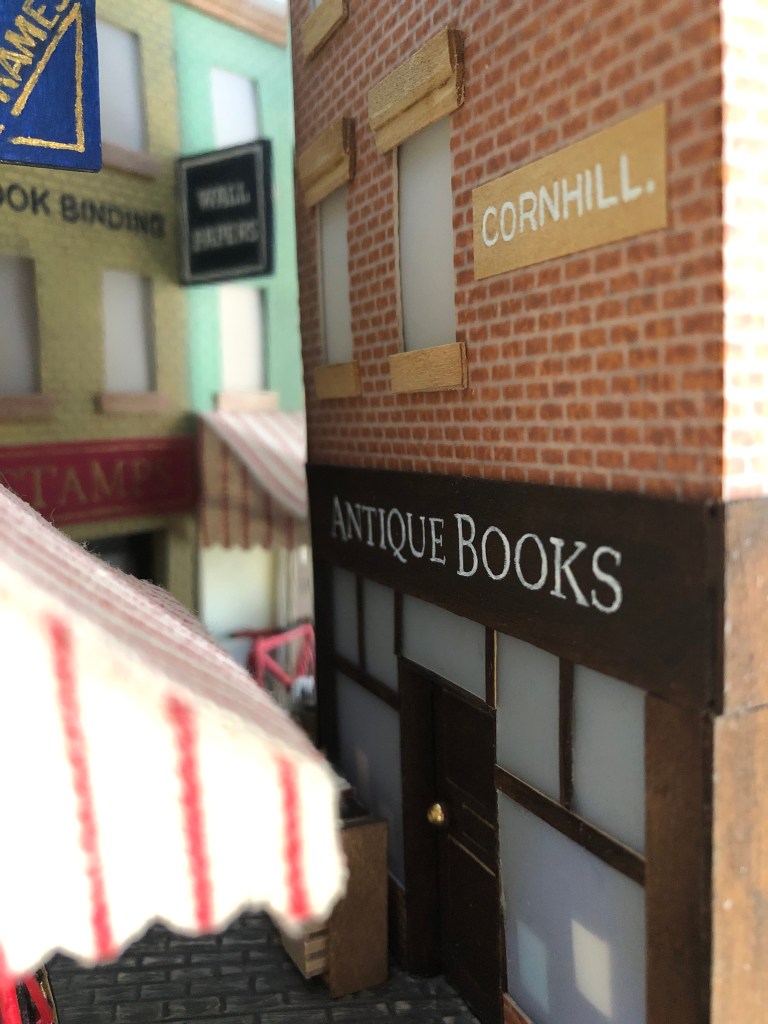
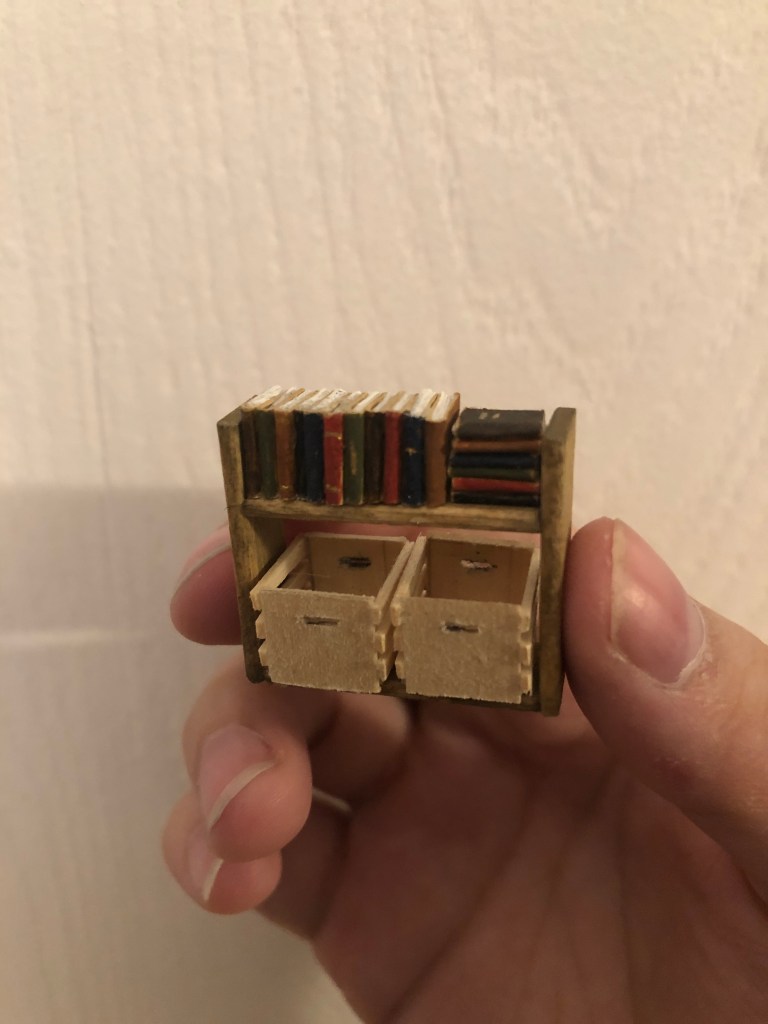
This is a bookcase insert that I designed to look like Cornhill, a street in Boston that used to be home to many booksellers and paper goods shops. Little remains of this former literary hub in the wake of urban renewal programs in the 1950s and 60s, but I have depicted it here in its heyday of the early 1900s.
Historical Cornhill
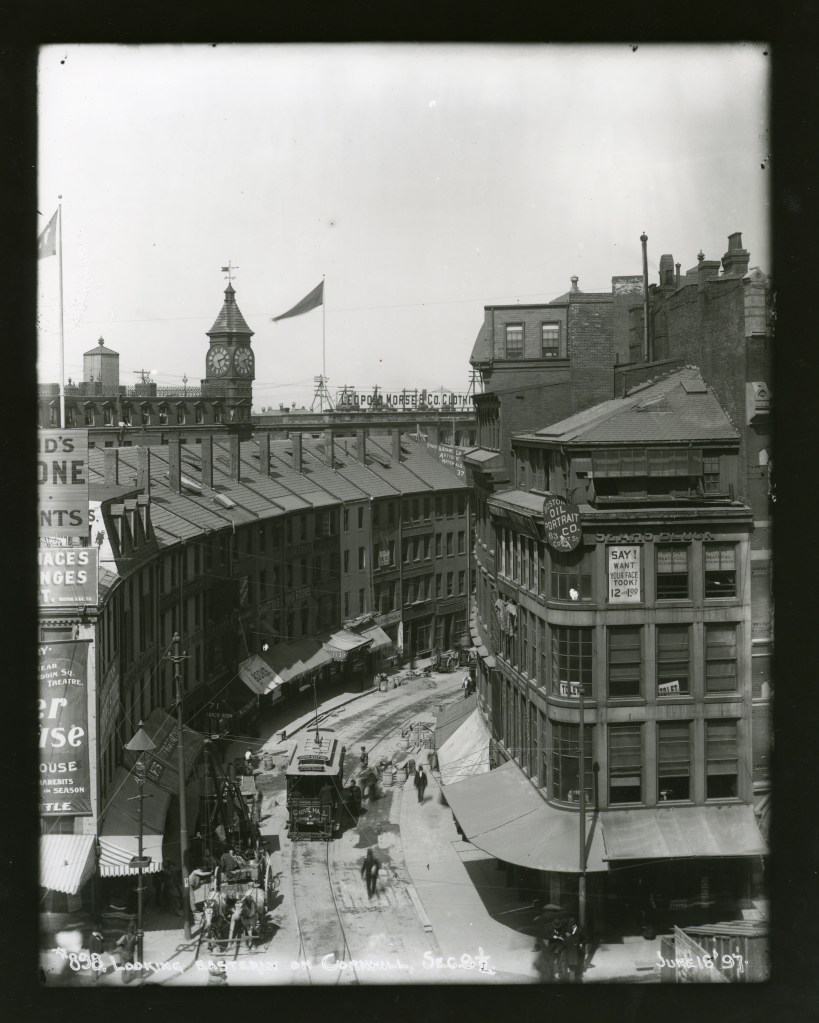
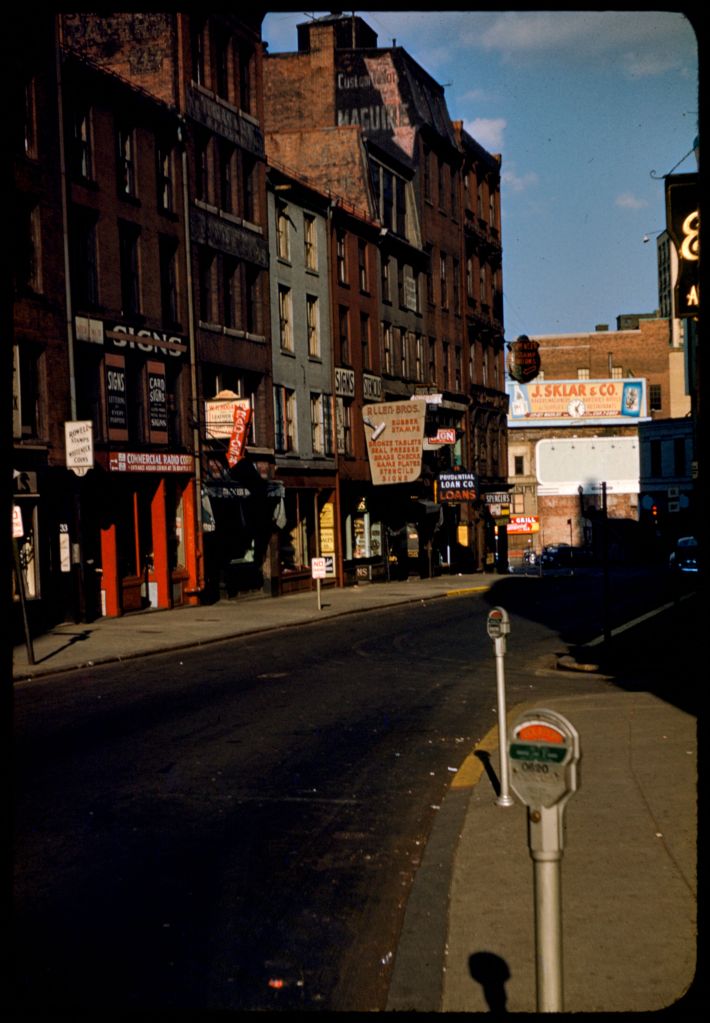

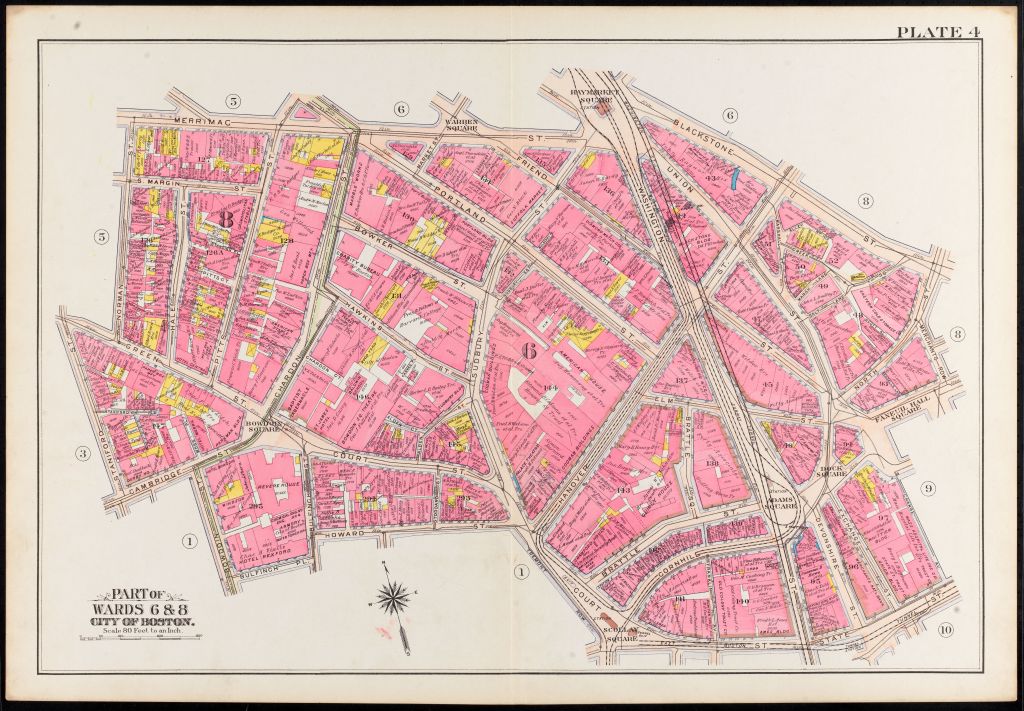
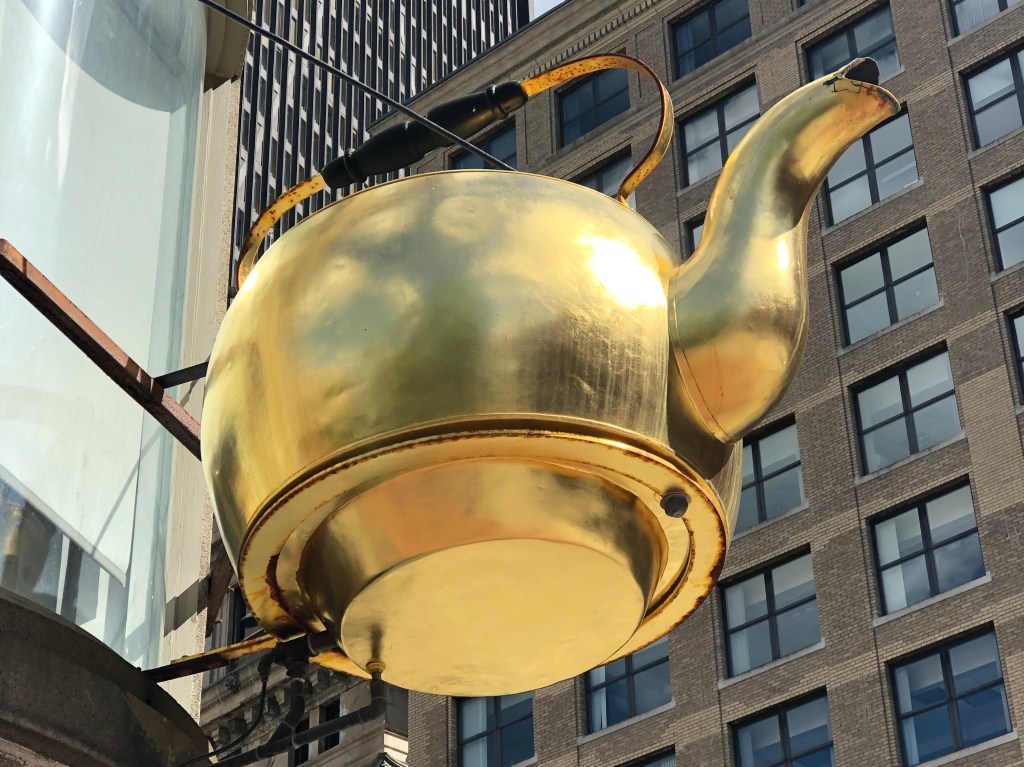
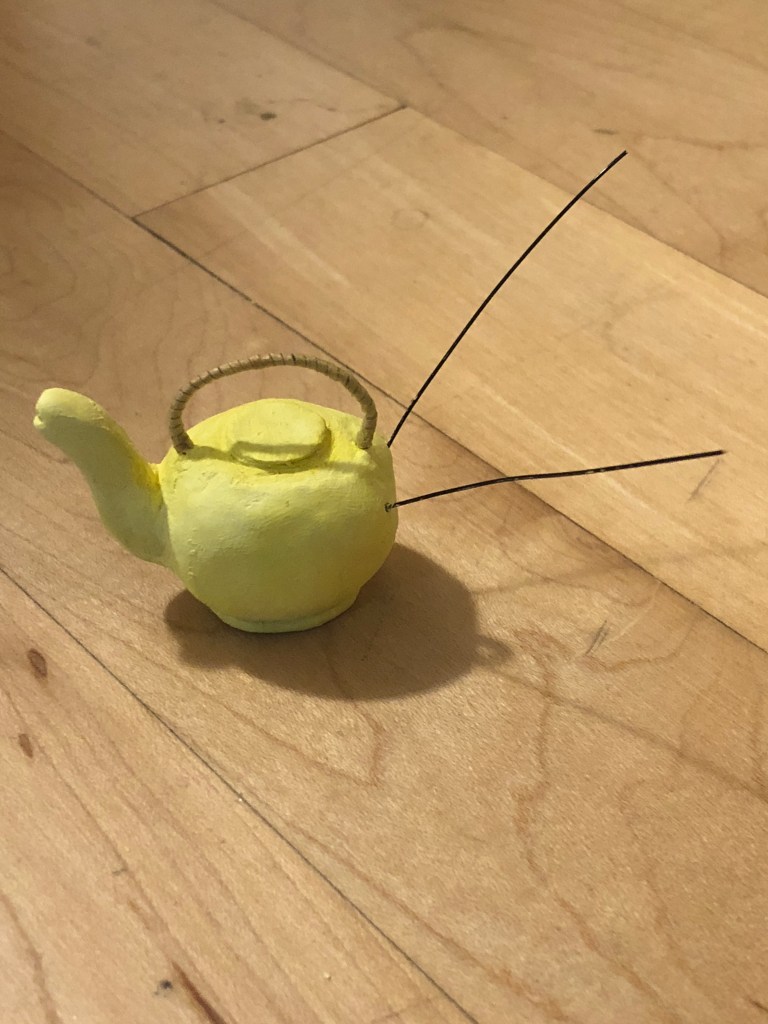
Cornhill was located in what is now City Hall Plaza in Government Center. The street bridged Scollay Square and Adams Square, curving around the Sears Block and Sears Crescent buildings. These two buildings are some of the only surviving remnants of Cornhill and the surrounding area. Scollay Square was also home to the Oriental Tea Company, which used a giant, golden, steaming tea kettle to advertise its business.
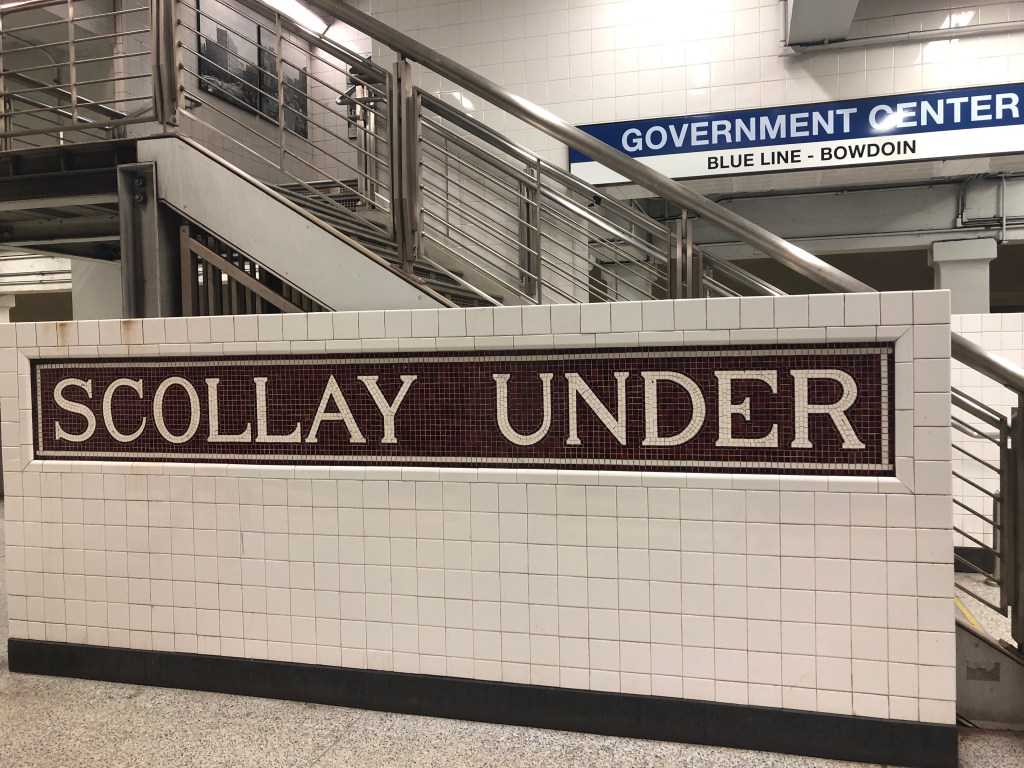
Most of the current Government Center was built in the 1960s after the older buildings were torn down, but small hints of its past remain. The Government Center T station has incorporated old tile mosaic signs from its previous iteration as Scollay Station (the “under” in the mosaic refers to the lower track that is the current Blue Line). Likely the most notable surviving artifact is the steaming kettle. It is affixed to the Sears Block at Cornhill’s former entrance and is steaming away after over 150 years.
Build Process
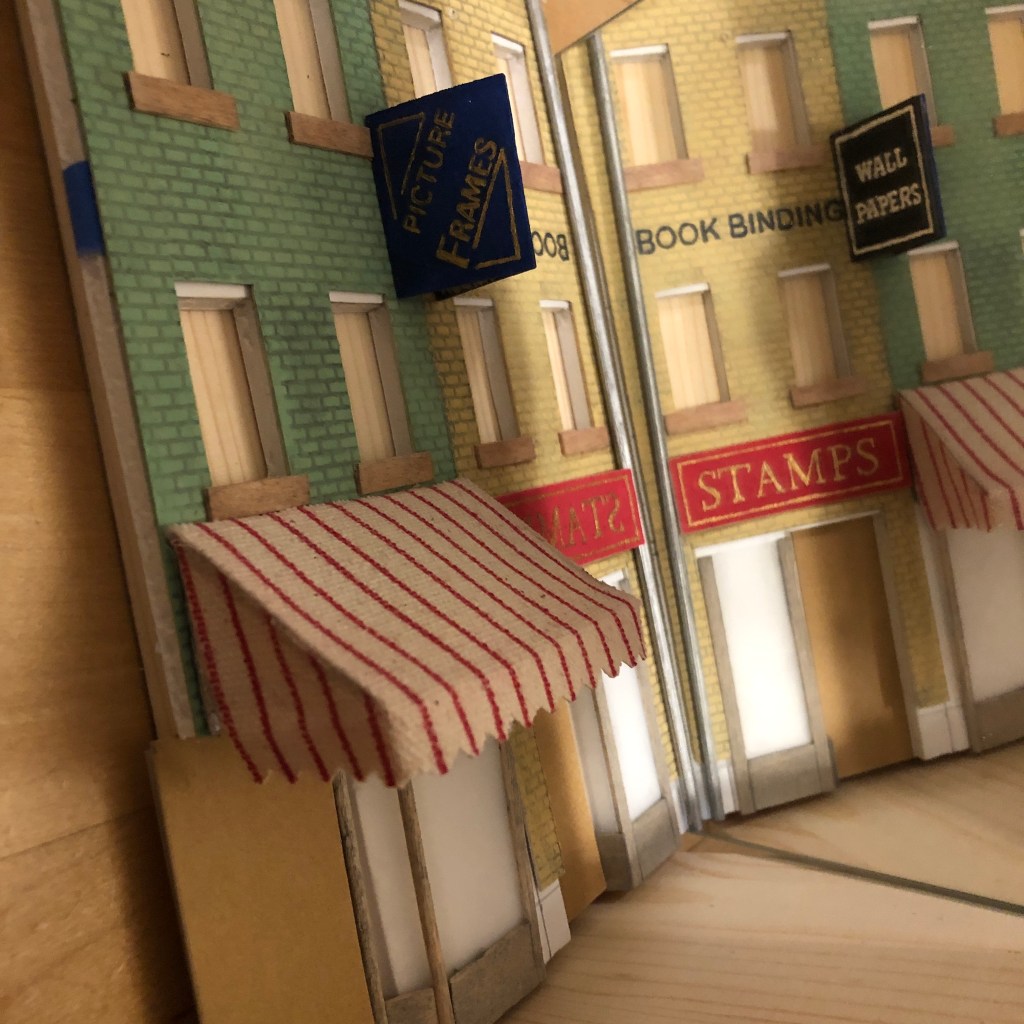
This book nook only uses easily available craft materials and processes, so there are no 3D printed or laser-cut parts. The plastic mirror is set at a slight angle to give the illusion of depth and to mimic the curve of Cornhill. I situated painted signs so they would only be visible on one side of the mirror or the other. For example, the STAMPS sign is painted in reverse since the awning mostly blocks the reversed letters to the viewer.
The brick texture of the buildings is from a model railroad brick pattern sheet. This sheet required several coats of paint and a top wash to add mortar lines and grime. The signs are made from thin balsa. I modeled the kettle from air-dry clay and thin gauge wire, and then painted its golden exterior. The street cobblestones are also made from air-dry clay and slightly angled to give the illusion of a continuous, curved street through the mirror. Much of the rest of the buildings are common craft and household materials: toothpicks, bamboo skewers, Popsicle sticks, card stock, foam board, etc.
I used a battery-powered LED string light to illuminate the shop windows. The shop lights are routed through the foam board backing to all the windows on both sides of the street. A separate LED backlight panel serves as the “daylight” illumination for the scene. The switches for both battery packs are located behind the mirror.



 Tatiana Mowry